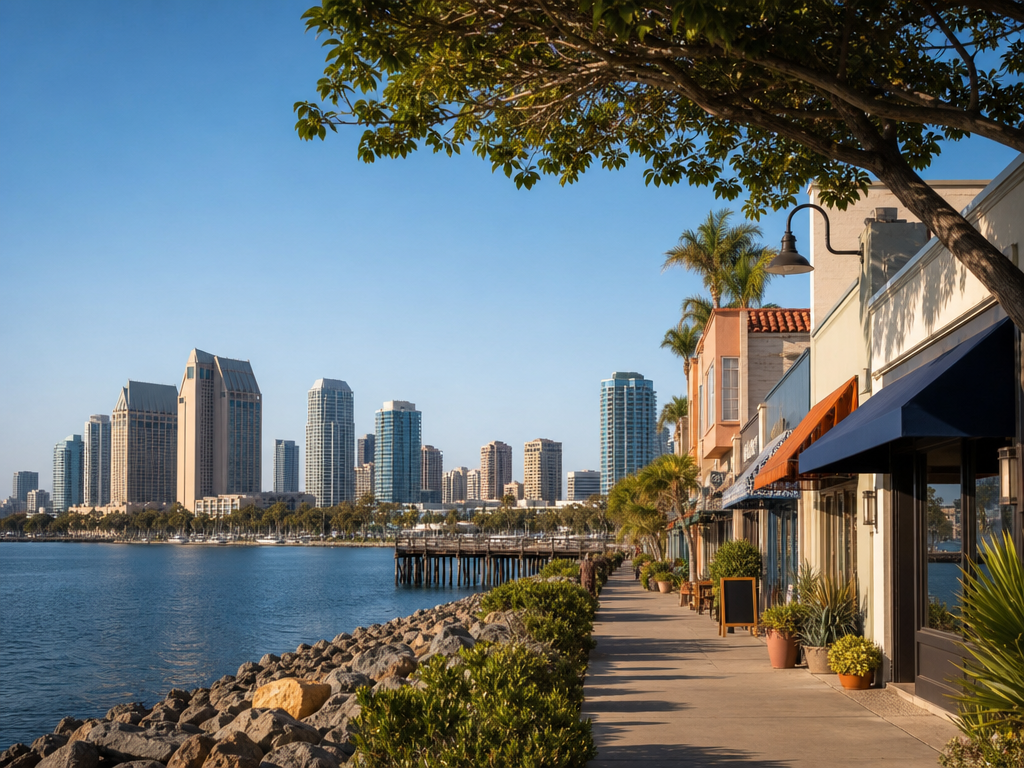
Why San Diego’s Small Business Economy Runs Differently Than You Think
Most conversations about San Diego’s economy default quickly to biotech unicorns, Navy contracts, and tourism revenue. That framing isn’t wrong, but it crowds out a more granular and arguably more interesting story: the city’s small business ecosystem is unusually resilient, unusually fragmented by neighborhood, and shaped by pressures that don’t show up in the headline numbers. If you’re trying to understand the local market here — whether to open a business, find a partner, or benchmark a similar market — the surface read will mislead you.
San Diego County has roughly 140,000 small businesses, accounting for about 99% of all businesses in the region and employing close to half the private-sector workforce, according to data from the U.S. Small Business Administration’s San Diego District Office. Those numbers are consistent with national averages, which makes them easy to dismiss. What’s not average is the combination of factors pulling on those businesses simultaneously: one of the highest commercial rents in the continental United States, a deeply bifurcated consumer base, and an unusually high concentration of defense and research spending that creates both opportunity and distortion in the local market.
The Neighborhood Problem No One Talks About
San Diego is not one market. It is closer to fifteen, stitched together by freeways and separated by genuine cultural and economic distance. A san diego business that thrives in North Park will not necessarily find traction in Chula Vista, and a concept built for La Jolla’s discretionary-income density can struggle badly in City Heights. This hyperlocal fragmentation is the single most underestimated variable for businesses entering the market.
North Park and the Creative Economy Cluster
North Park functions as something like the city’s small-business laboratory. The neighborhood has a high density of independent restaurants, specialty retail, and creative service firms — the kind of businesses that depend on foot traffic, word of mouth, and a customer base that actively prefers local over chain. The North Park Main Street Association reports over 400 businesses along its primary commercial corridors. Rents are high relative to what the customer volume can sometimes support, which is why turnover remains a persistent problem even as the neighborhood’s overall reputation stays strong.
Chula Vista and the South Bay Opportunity Gap
Chula Vista is San Diego County’s second-largest city, with a population exceeding 275,000 and a median household income that, while lower than the county average, has been rising steadily. The south bay market is systematically underserved by independent small business — partly because of historical underinvestment, partly because entrepreneurs have tended to cluster where the visible consumer culture already exists. That gap represents a genuine opening. Businesses in food service, healthcare access, financial services, and trades are among the sectors with demonstrably unmet local demand.
What the Defense Economy Does to Small Business
San Diego hosts the largest concentration of military personnel in the world. Naval Base San Diego, Marine Corps Air Station Miramar, and Camp Pendleton together generate billions in direct economic activity annually. The downstream effects on the small business environment are complicated.
The Subcontracting Layer
A substantial number of small businesses in San Diego — particularly in engineering, IT services, logistics, and professional services — exist primarily or substantially within the defense subcontracting ecosystem. These firms are technically small businesses, often fewer than 50 employees, but their revenue model is fundamentally different from consumer-facing small businesses. They compete for government set-aside contracts, navigate federal procurement rules, and face budget-cycle risk that has nothing to do with local consumer sentiment. The SBA’s 8(a) Business Development Program has a notably active presence in San Diego for exactly this reason.
The Consumer Spillover
Military households represent a large and relatively stable consumer base, but they have specific characteristics: higher-than-average mobility, strong brand loyalty once established, and purchasing patterns shaped by base commissaries and exchanges. Small businesses that successfully market to military families — particularly in neighborhoods like Oceanside, National City, and areas near Miramar — often build loyalty that follows families through multiple duty stations, creating a kind of distributed customer base that most local businesses never develop.
The Cost Structure Reality
Running a small business in San Diego is expensive in ways that compound quickly. Commercial lease rates in desirable neighborhoods routinely run $3.50 to $5.50 per square foot per month for retail space — figures that place San Diego among the top ten most expensive commercial markets in the country. Labor costs are pushed upward by California’s minimum wage trajectory (the state minimum reached $16 per hour in 2024, with higher floors in some sectors) and by genuine competition for workers in a market where the tech and biotech sectors absorb a significant share of skilled labor.
How Surviving Businesses Adapt
The small businesses that navigate San Diego’s cost structure successfully tend to share a few operational characteristics:
- They operate with intentionally smaller footprints — ghost kitchens, shared retail, and service-based models that reduce or eliminate the square footage burden.
- They treat the outdoor environment as an extension of their physical space, using San Diego’s climate as a structural cost advantage (patio seating, outdoor retail, mobile service delivery).
- They build revenue models with multiple streams — a restaurant that also does catering, a retailer that also teaches classes, a service firm that also licenses content or tools.
- They participate actively in neighborhood business associations, which in San Diego have real influence over parking policy, event permits, and local marketing budgets.
Sectors With Structural Tailwinds
Not every sector faces the same headwinds. The local market has genuine structural advantages in a handful of areas that deserve direct attention.
Health and Wellness
San Diego’s outdoor culture and demographic skew toward health-conscious consumers has made it one of the stronger markets in the country for fitness, nutrition, and wellness businesses. This extends well beyond gyms — it includes specialty food retail, functional medicine practices, recovery services, and mental health providers. The concentration of biotech workers and military veterans also creates demand for specific health services that a thoughtful small business can target with precision.
Trades and Home Services
San Diego’s housing stock is aging in specific pockets, and the region’s construction boom has created a persistent backlog of renovation and maintenance work. Licensed contractors, electricians, plumbers, and HVAC specialists consistently report demand outpacing their capacity to serve it. Small businesses in the trades that invest in digital presence and review management — particularly on platforms like Google Business Profile and Yelp, where local service searches are heavily concentrated — have a meaningful acquisition advantage in this market.
Food and Beverage with a Distinct Identity
San Diego’s craft beer industry is well documented — the region has over 150 active breweries, a number that has stabilized after years of rapid growth. The more interesting current trend is in food businesses with a defined geographic or cultural identity: Baja-influenced cuisine, Pacific Rim concepts, and farm-to-table operations with genuine supply chain connections to local agriculture in the Carlsbad and Escondido corridors. These businesses compete on identity as much as product, which creates a durable differentiation that commodity competitors can’t easily replicate.
What This Means for Anyone Watching the Market
San Diego’s small business environment rewards specificity. Generic concepts in generic locations face the full weight of the cost structure without the protection that a defined niche or a loyal neighborhood base provides. The businesses that are building durable positions here are the ones that made a deliberate choice about exactly where, exactly for whom, and exactly why their version of a product or service belongs in this particular market.
For those tracking the local market from the outside — whether as investors, as business directory researchers, or as entrepreneurs evaluating entry — the useful frame isn’t “how healthy is San Diego’s small business scene overall” but rather “which specific combination of neighborhood, sector, and customer base is underserved right now.” That question has a different answer in Barrio Logan than it does in Del Mar, and getting that granularity right is the difference between a useful market read and a misleading one.
The broad numbers on san diego business formation and survival rates look respectable. The real story lives at the street level, neighborhood by neighborhood, and it is considerably more nuanced than the aggregate data suggests.